Thursday, May 11, 2023

DCXVII. SHOSTAKOVICH, Dmitri: String Quartet #8 in C Minor, Op. 110

DCXVII. SHOSTAKOVICH, Dmitri (1906-1975)

String Quartet #8 in C Minor, Op. 110 (1960)
1. Largo
2. Allegro molto
3. Allegretto
4. Largo
5. Largo
Emerson String Quartet
(21:55)


Dedicated "In memory of the victims of fascism and war."

Maxim insisted that his father's dedication referenced all the victims of totalitarianism.

Daughter Galina says that he dedicated it to himself.

His friend, Lev Lebedisky, said that Shostakovich thought of the work as his epitaph and that he planned to commit suicide around this time.

In his liner notes for the Borodin Quartet's recording, Erik Smith wrote:

"The quartet played this work to the composer at his Moscow home, hoping for his criticisms. But Shostakovich, overwhelmed by this beautiful realisation of his most personal feelings, buried his head in his hands and wept. When they had finished playing, the four musicians quietly packed up their instruments and stole out of the room."

**

We have only to study the music in order to glean a look into this greatest, and most profound quartet of the fifteen.


These four notes represent Shostakovich's musical signature, DSCH. In German musical notation E-Flat is S; and B-natural is H.

This motif occurs in many of his works, but never as frequently as it does throughout this entire quartet.

The quartet is played with no pauses between movements.

First movement

The motif is played in canon, beginning in the cello; transposed up a fifth for the viola; the second violin at the original pitch; and the first up a fourth:


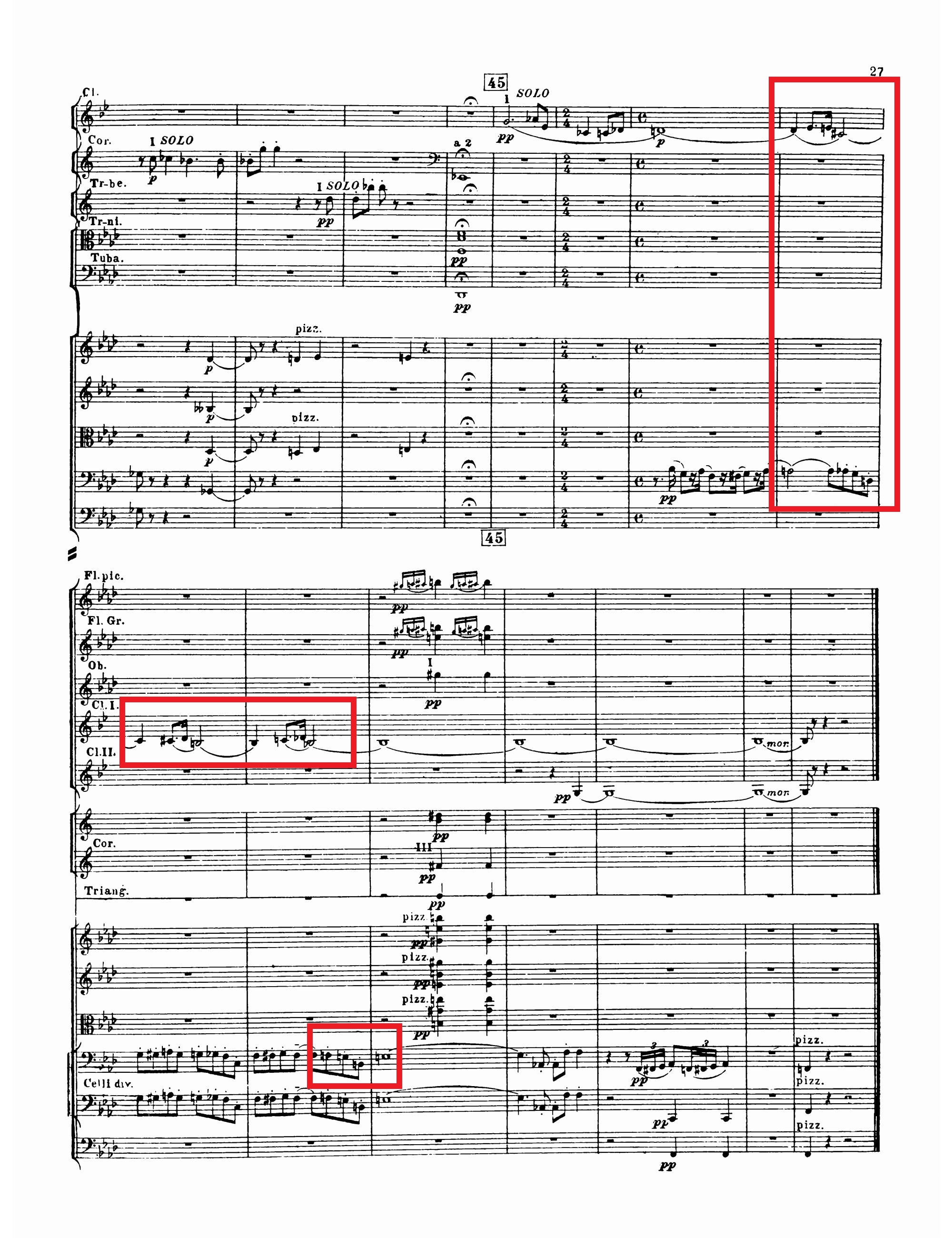
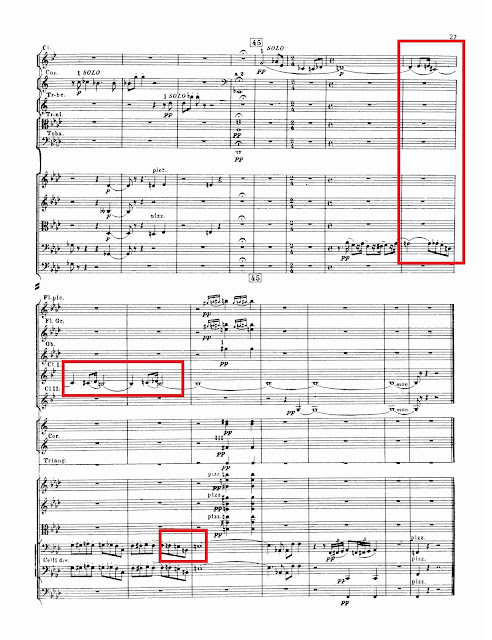
By bar 17, he is self-quoting, here from the beginning of his youthful First Symphony:


First Symphony:


There follows a melancholy first violin over a drone:


How cleverly DS sets up the key of the next movement (G-Sharp minor) by changing the A-Flat to an enharmonic G-Sharp!


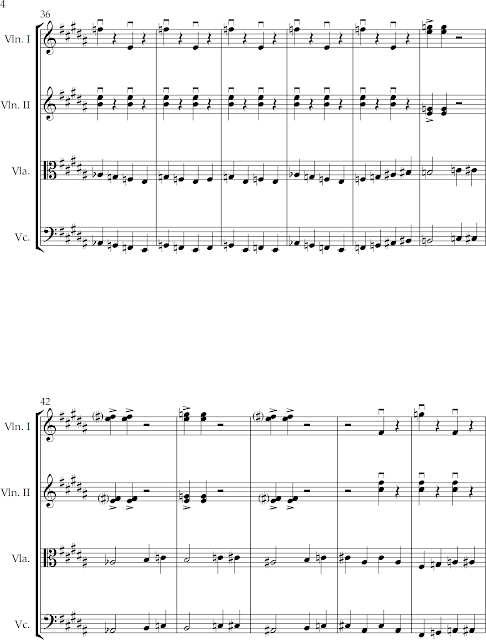


Second movement

There is an intense ferocity here which once again brings up the DSCH motif:


Third movement

The DSCH motif starts us off, but DS switches to triple meter in what sounds like a grotesque dance of death:


Fourth movement

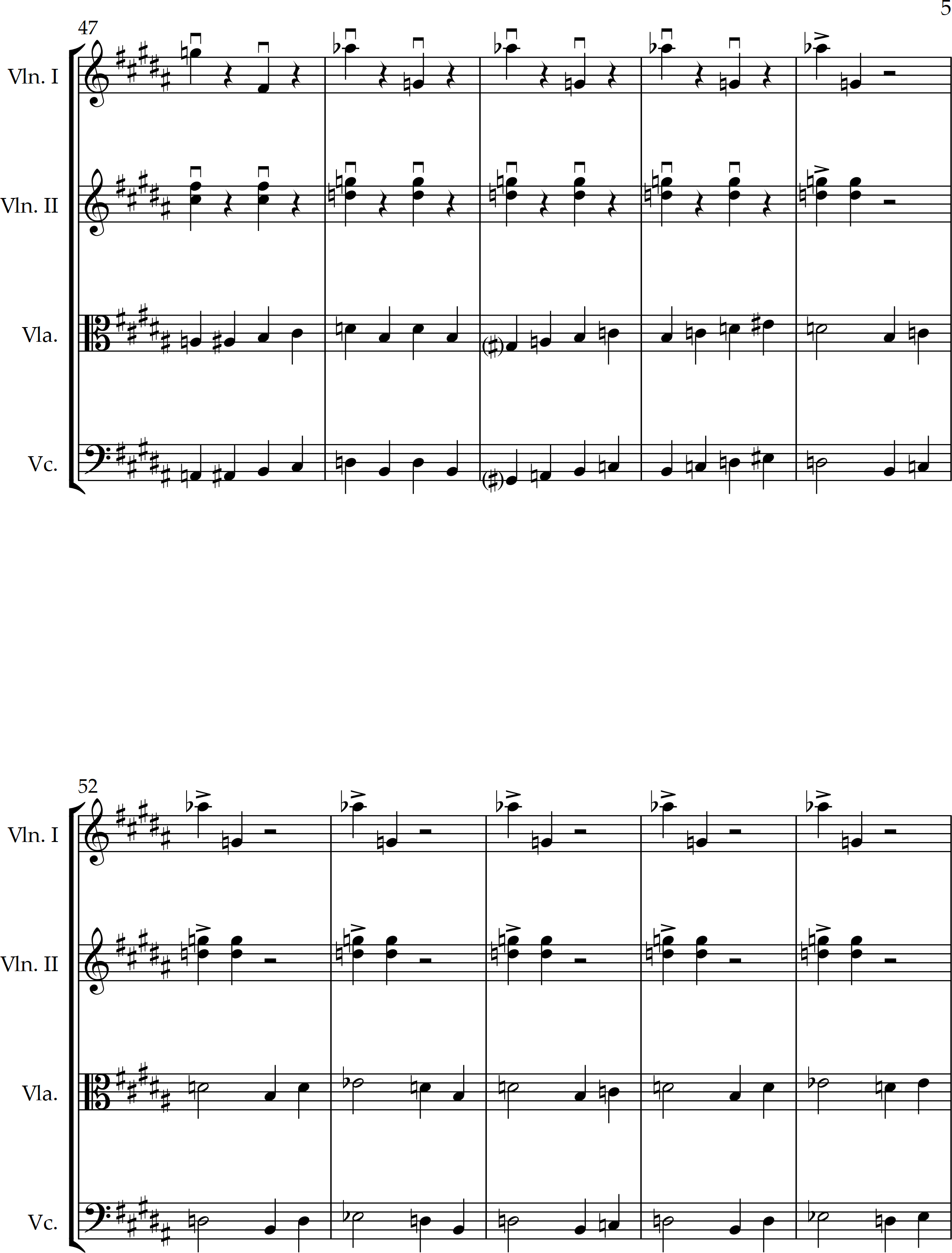
Long note values interrupted by three heavily-accented three-note chords:


Fifth movement

Filled with the DSCH motif, and ending with fading melancholy:




Wednesday, May 10, 2023

DCXVI. MENDELSSOHN, Felix: Hebrides Overture, Op. 26

DCXVI. MENDELSSOHN, Felix (1809-1847)

Hebrides Overture, Op. 26 (1830)
Frankfurt Radio Symphony
Andrés Orozco-Estrada, cond.
(11:26)


"I would gladly give all I have written, to have composed something like the Hebrides Overture." -- Johannes Brahms

Done and done. [sorry, Brahms fans ...]

After traveling to England, Mendelssohn made a visit to Scotland, where he composed his Third Symphony ("Scottish").

He wrote to his sister Fanny about the landscape, enclosing this drawing:


A stand-alone piece -- and not an overture to any other work -- this is surely an example of one of the earliest "tone poems," which were to become such a popular form of composition later in the century.

Without any specific programme, the music depicts the wild Scottish landscape.

**

Bassoon and violas rise ascend with the motif that will define this piece:


Uniquely Mendelssohnian:


Monday, May 8, 2023

DCXIV. SHOSTAKOVICH, Dmitri: Symphony #1 in F Minor, Op. 10

DCXIV. SHOSTAKOVICH, Dmitri (1906-1975)

Symphony #1 in F Minor, Op. 10 (1924-25)
1. Allegretto -- Allegro non troppo
2. Allegro -- Meno mosso -- Allegro -- Meno mosso
3. Lento -- Largo -- Lento (attacca:)
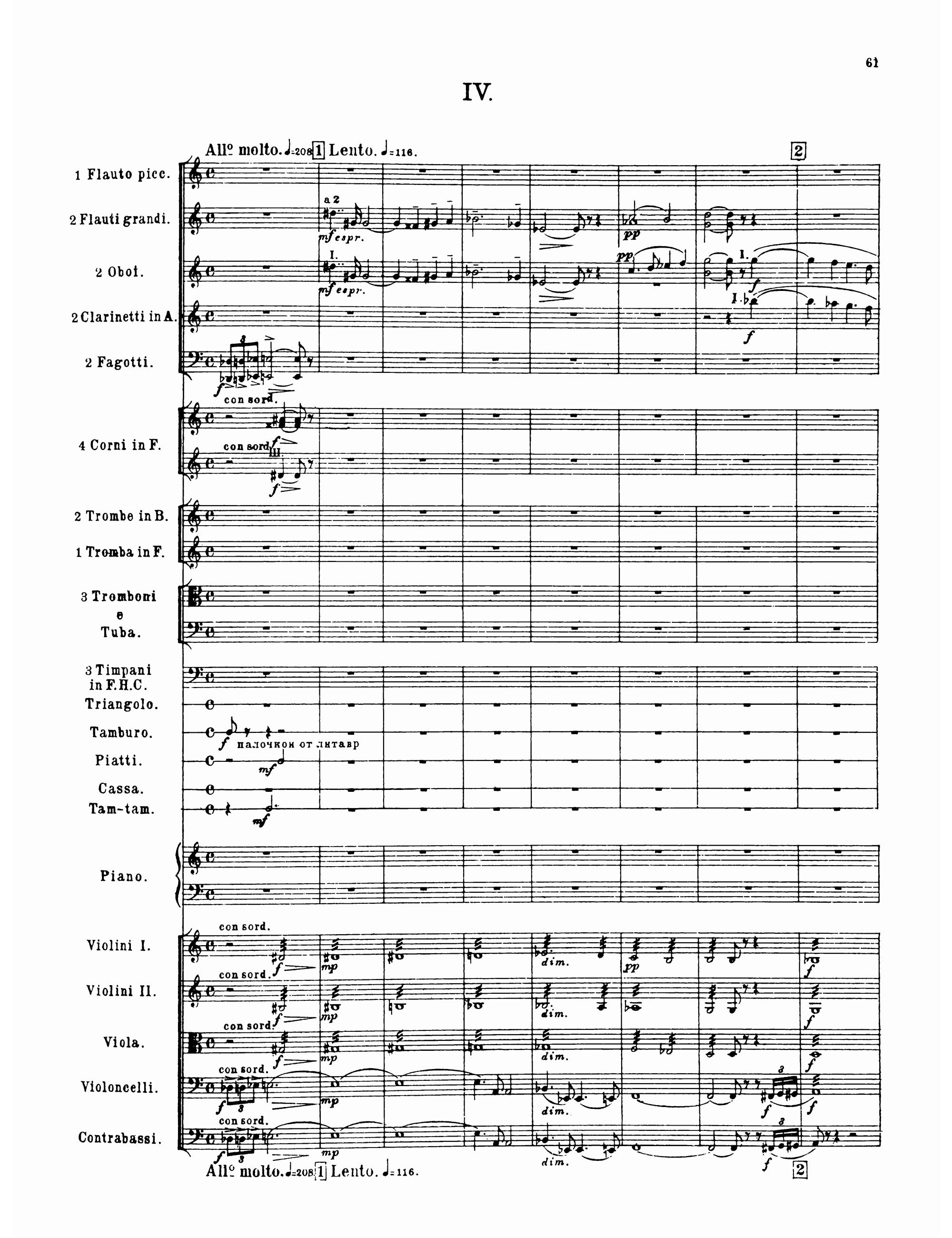
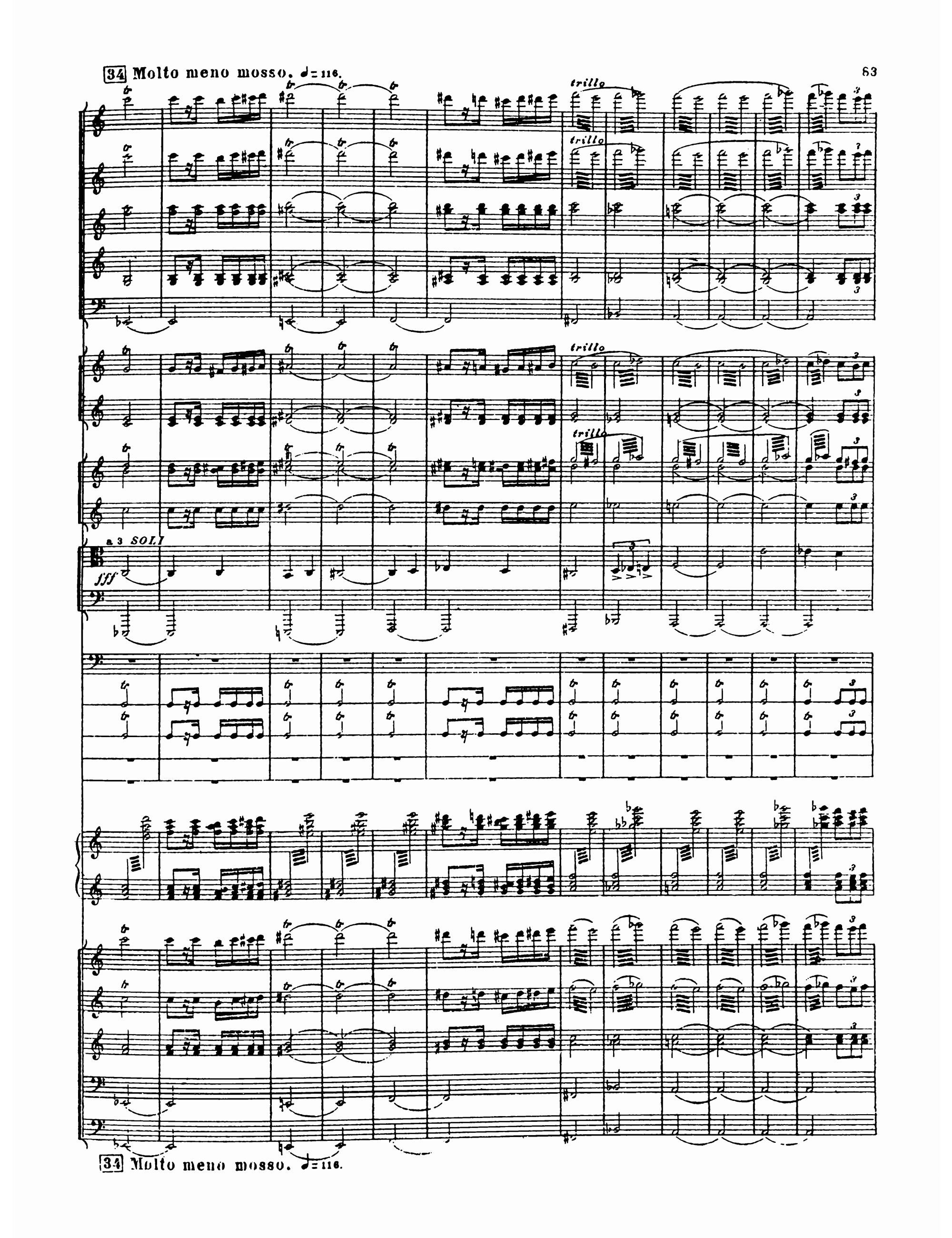
4. Allegro molto -- Lento -- Allegro molto -- Meno mosso -- Allegro molto -- Molto meno mosso -- Adagio
The Mariinsky Orchestra
Valery Gergiev, cond.
(33:38)

The young 19-year-old's graduation thesis. The charm and sophistication of this work in no small part contributed to Shostakovich's fame. Although the First has no program per se, his next two symphonies (not nearly as popular today) would include choral music which -- necessarily at that point -- glorified Lenin and the Soviet state.

But this is just pure music:

First movement

A jocular little duet between muted trumpet and bassoon seems to suggest the burlesque, which the young student had soaked up in his work as a silent cinema pianist ...


A memorable theme introduced by the clarinet. Shostakovich repeats the skipping feeling with the 1/8th-1/16th motif:


A second theme in a waltz-like tempo is introduced by the flute:


The theme returns as a march before repeating the waltz section.


The original thematic material returns -- darker -- but note the orchestration detail -- the triangle, which adds just the right amount of clarity, before Shostakovich ends with growling lower strings, pp.

Second movement

Switching the traditional second/third movement scheme of slow/fast to fast/slow, the whirling, skipping, joyful feeling of the first movement is transformed into a new theme, in the violins, preceding by a descending 16ths in the piano, a bold choice of orchestration.


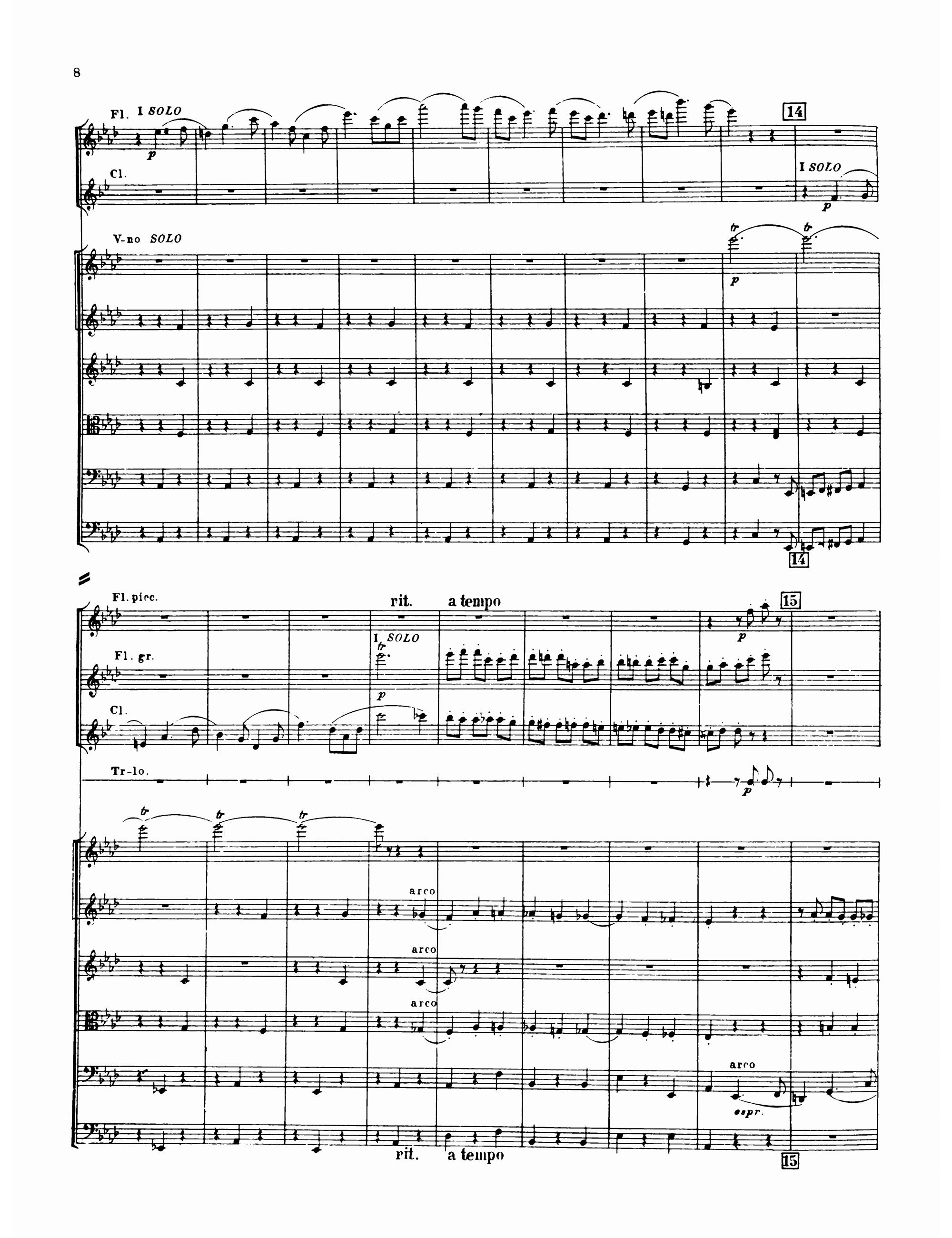
Meno mosso. Melancholy clarinets:


Check out the teenager's command of full-on orchestration:


Another pp ending -- with beautiful writing for percussion:


Third movement

As if to say -- so here is my tragedy. I'll write a lot more of this stuff when I get older and things really do get tragic!

The entire movement is filled with pathos, seemingly way beyond this 19-year-old's youth:


He ends with divisi solo strings and a snarling snare drum:


attacca:

Fourth movement

But no traditional vivace or allegro is forthcoming. Instead, he opens with the mournful character of the previous movement:


When the tempo does pick up, we have similar thematic material -- i.e., the 1/8-16/th motif common to many of the earlier music:


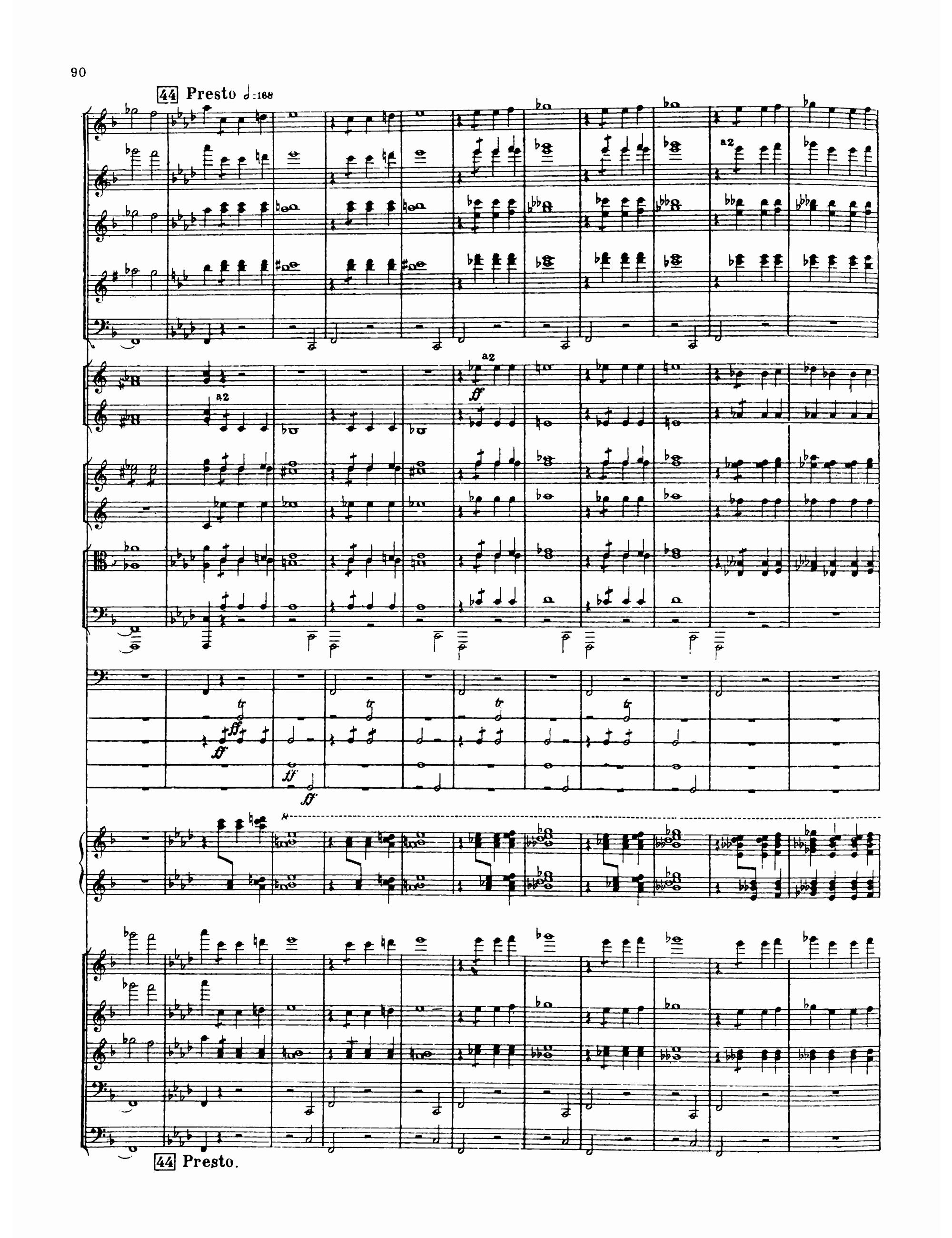
Full tutti orchestra, wired with dramatic tension:


Only to resolve to a forbidding timpani solo, followed by an exquisite muted cello solo:


A blazing presto ends this first of fifteen magnificent symphonic treasures!


INDEX to 1000 POSTS CLASSICAL BLOG A-M

N-Z ABRAHAMSEN, Hans / 10 Pieces for Orchestra / DCCCXCV ADAMS, John / Century Rolls / XXXVII ADAMS, John / Harmonielehre / CXXI ADAMS, John...