Tuesday, November 7, 2023

Monday, November 6, 2023

DCCXCVI. GLAZUNOV, Alexander: The King of the Jews, op. 95

DCCXCVI. GLAZUNOV, Alexander (1865-1936)

The King of the Jews, Op. 95 (1913)
1. Introduction and Chorus (9:44)
2. Song of the Disciples of Jesus (4:54)
3. Entr'acte to Act II (8:51)
4. Trumpets of the Levites (1:08)
5. Act II -- Conclusion (0:49)
6. Entr'acte to Act III, Scene 1 (8:34)
7. Entr'acte to Act III, Scene 2 (6:07)
8. Syrian Dance (6:45)
9. Entr'acte to Act IV (6:46)
10. Shepherd's Musette (1:17)
11. Psalm of the Believers (4:41)
Moscow Capella
Moscow Symphony Orchestra
Igor Golovschin, cond.

Incidental music for a religious drama written by the Grand Duke Konstantin, to be performed at the Hermitage by a group of army officers.

Sunday, November 5, 2023

DCCXCV. HENZE, Hans Werner: Symphony #10

DCCXCV. HENZE, Hans Werner (1926-2012)

Symphony #10 (1997-2000)
1. Ein Sturm (10:27)
2. Ein Hymnus (8:54)
3. Ein Tanz (9:18)
4. Ein Traum (9:54)
Rundfunk-Sinfonieorchestra Berlin
Marek Janowski, cond.


Saturday, November 4, 2023

DCCXCIV. BARTÓK, Béla: Kossuth

DCCXCIV. BARTÓK, Béla (1881-1945)

Kossuth (1903)
1. Kossuth
2. Why are you so grieved, my dear husband?
3. The fatherland is in danger!
4. Formerly we had a better life ...
5. Then our fate changed for the worse ...
6. Up and fight them!
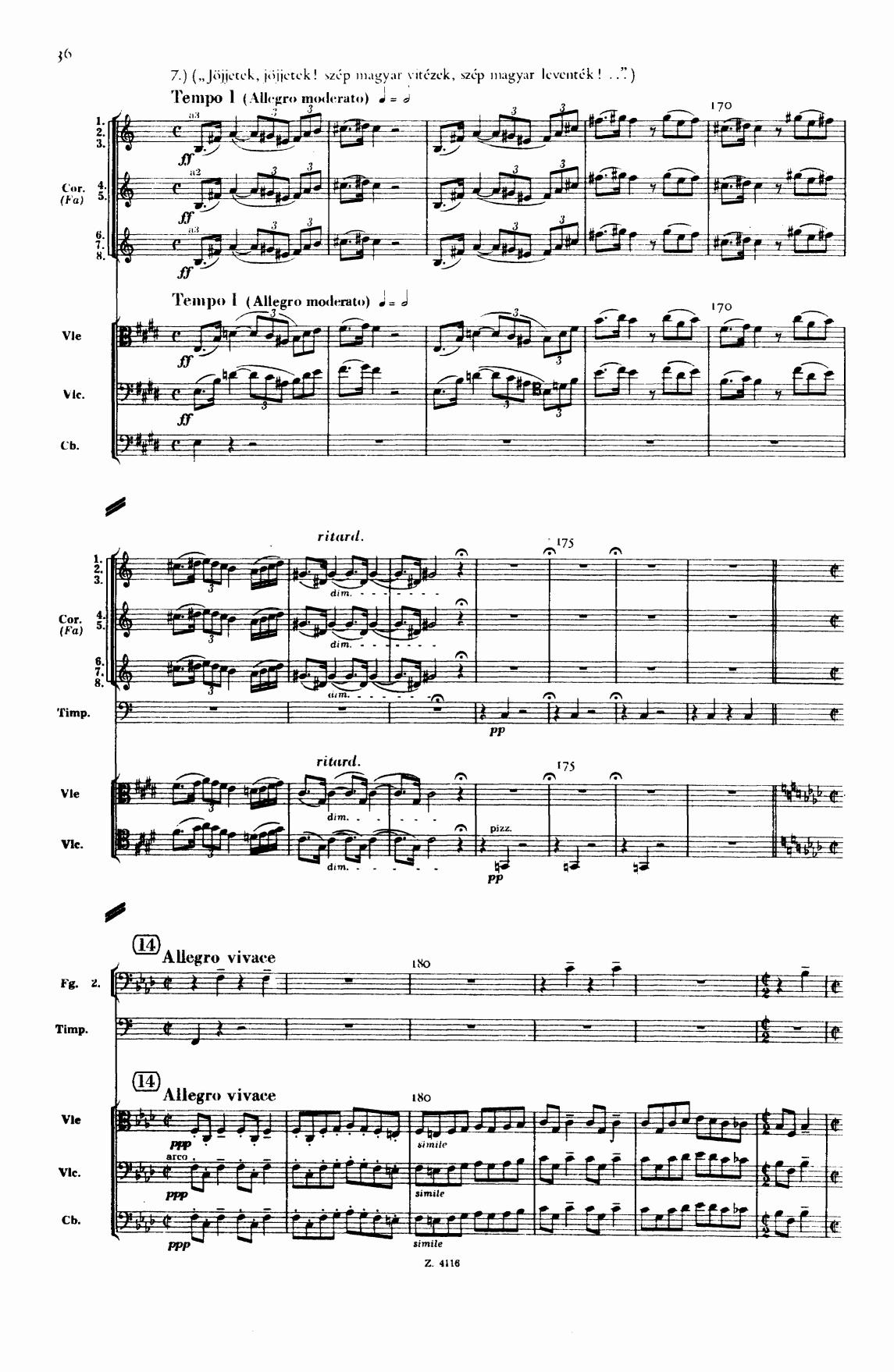
7. Come, come! You splendid lads you valiant Hungarian warriors!
8. (without title)
9. All is over!
10. Everything is quiet, very quiet ...
Frankfurt Radio Symphony Orchestra
Andrés Orozco-Estrada, cond.
(26:07)


The 21-year-old Bartók when he discovered Richard Strauss's Also Sprach Zarathustra and Ein Heldenleben. He met Strauss at the Budapest premiere of Zarathustra.

"I was aroused as by a flash of lightning by Also Sprach Zarathustra. It contained the seeds for a new life."

He then set about making a piano reduction of Ein Heldenleben -- which is always the best way to really learn an orchestral work.

He then composed this piece -- not bad for a kid in his 20's ... it shows a mastery of orchestration and the ability to set a mood, appropriate for the subject.

1. Kossuth


2. Why are you so grieved, my dear husband?


3. The fatherland is in danger!


4. Formerly we had a better life ...


5. Then our fate changed for the worse ...


6. Up and fight them!


7. Come, come! You splendid lads you valiant Hungarian warriors!


8. (without title)


9. All is over!


10. Everything is quiet, very quiet ...


Friday, November 3, 2023

DCCXCIII. INCE, Kamran: Symphony #3 ("Siege of Vienna")

DCCXCIII. INCE, Kamran (1960-       )

Symphony #3 ("Siege of Vienna") (1995)
1. Long March
2. City under Siege
3. War of the Walls
4. Forgotten Souls
5. Calls
6. Final Assault
7. Victorious City
8. The Great Retreat
Prague Symphony Orchestra
Kamran Ince, cond.
(24:45)


Born in Montana, raised in Turkey.

Winner of the Lili Boulanger Prize in 1988.

History

Thursday, November 2, 2023

DCCXCII. HINDEMITH, Paul: Kammermusik #2 for Piano and 12 instruments, Op. 36/2

DCCXCII. HINDEMITH, Paul (1895-1963)

Kammermusik #2 for Piano and 12 instruments, Op. 36/2 (1925)
1. Sehr lebhafte Achtel
2. Sehr langsame Achtel
3. Kleines potpourri: sehr lebhafte Achtel
4. Finale: Schnelle Viertel
Gérald Blerk, piano
Concerto Amsterdam
[scrolling score]
(19:43)


Wednesday, November 1, 2023

DCCXCI. MOZART, Wolfgang Amadeus: Concerto #21 in C Major for Piano, K. 467

DCCXCI. MOZART, Wolfgang Amadeus (1756-1791)

Concerto #21 in C Major for Piano, K. 467 (1785)
1. Allegro maestoso
2. Andante
3. Allegro vivace assai
Fazil Say, piano
Frankfurt Radio Symphony Orchestra
Peter Oundjian, cond.
(32:48)


What a mind that can chicken-scratch this divine music onto parchment! It is just a series of tonic-dominant phrases -- but what exquisite beauty!

Written just a few weeks after the great D Minor concerto, K. 466.

First movement

The little march quickly transforms into a two-bar lyrical violin phrase, interspersed with a wind/brass fanfare:


Two short phrases from the bassoon and flute lead into the entrance of the soloist -- who plays only five bars before halting on a held dominant:


New material:


Transition to G Major:

A few bars, the an abrupt move to G Minor (Symphony #40, anyone?):


Second movement


How not to use Mozart in film. (The concerto is often stupidly subtitled "Elvira Madigan"):

Or worse:


Third movement

A rondo, with a joyous spirit. A short orchestral introduction leads to another held dominant, allowing the pianist to ornament the chord, before jumping back into the theme in thirds.


The movement features a lot of call-and-response, and comes to a close with exciting finality:

INDEX to 1000 POSTS CLASSICAL BLOG A-M

N-Z ABRAHAMSEN, Hans / 10 Pieces for Orchestra / DCCCXCV ADAMS, John / Century Rolls / XXXVII ADAMS, John / Harmonielehre / CXXI ADAMS, John...