Monday, January 23, 2023

DIX. WEBERN, Anton: Five Movements, Op. 5

DIX. WEBERN, Anton (1883-1945)

Five Movements, Op. 5 (1909)
1. Heftig bewegt Tempo I
2. Sehr langsam
3. Sehr bewegt
4. Sehr langsam
5. In zarter Bewegung
Telegraph Quartet
(12:12)


The Complete Works of Webern fit neatly onto six CDs:


This early work -- atonal but not dodecaphonic -- shows the pupil opening the door for the teacher (Schoenberg). Webern astonished those with the ears capable of comprehending this new and fantastically original string quartet. This was 1909 -- Brahms only nine years in his grave!

1. Heftig bewegt Tempo I

In the first six bars, Webern uses four different ways of playing a stringed instrument, other than the traditional arco (with the bow) ...
  • pizzicato
  • col legno (with the wooden side of the bow)
  • am steg (or sul ponticello, playing next to the bridge, creating a spooky, eerie sound)
  • artificial harmonic (produced by holding down a finger and bowing [in this case] a fourth above, producing a very high pitch)


Intervallic motifs are encased in "cells" which reoccur in various disguises throughout the movement, and the work, as a whole. This, of course, prefigures the 12-tone discipline of the four types of rows: 1) an original row of 12 notes with none repeated; 2) the retrograde of the row; that is starting with the 12th note and ending with the first; 3) the inversion of the row -- that is, inverting the intervals (an ascending minor second becomes a descending major seventh); and 4) the retrograde inversion.

We can see Webern's method by inspecting the first two notes -- an augmented octave -- and his use of the interval of the sixth, both vertically and horizontally.

Besides all this, there is an emotional resonance in the writing. Every few bars, a new feeling seems to emerge.

2. Sehr langsam

The form of the arch in this five-movement work would inspire Bartók and later generations (see Post V addendum) -- the coordination of ideas between movements 1 & 5; 2 & 4, and with 3 reaching its peak midway.

Here, we see the importance of the sixth -- both major and minor. (The cello plays a major sixth + its top note (F) creates another major sixth the second violin's top note (D).

The viola part creates a minor sixth horizontally -- its first note an F and under the fermata, a C-Sharp. An augmented fifth, which can be enharmonically respelled as a minor sixth (F-D-Flat).

The entire movement consists of only fourteen bars!


3. Sehr bewegt

Here we have an actual pulse in the cello, over which the higher strings play sul pont. and pizz. Webern inserts a ritard and accelerando before ending the movement with a unison pizz. on C-Sharp.


4. Sehr langsam

Webern mirrors the second movement, with this one being only thirteen bars.

The strings are muted, as we note the augmented octave from the first movement appearing three times ... the music shifts and sways with several ritards.


5. In zarter Bewegung

The final movement brings together lots of previous material. Again, the strings are muted, and the cello begins with horizontal minor sixths, followed by repeating minor thirds. The soft upper strings include the intervals of major sevenths and augmented octaves.

The final chord -- containing a clashing C-Natural and C-Sharp -- also produces a minor and major seventh, and a tritone (F-B) spread over an octave-and-a-half between the cello and first violin's final note.


Sunday, January 22, 2023

DVIII. BACH, J.S.: Cantata #64: Sehet, welch eine Liebe hat uns der Vater erzeiget, BWV 64

DVIII. BACH, J.S. (1685-1750)

Cantata #64: Sehet, welch eine Liebe hat uns der Vater erzeiget, BWV 64 (1723)
1. [Coro]: Sehet, welch eine Liebe hat uns der Vater erzeiget
2. Choral (Coro): Das hat er alles uns getan
3. Recitativo (Alto): Geh, Welt! behalte nur das Deine
4. Choral (Coro): Was frag ich nach der Welt
5. Aria (Soprano): Was die Welt in sich hält
6. Recitativo (Basso): Der Himmel bleibet mir gewiß
7. Aria (Alto): Von der Welt verlang ich nichts
8. Choral (Coro): Gute Nacht, o Wesen
Concerto Copenhagen
Lars Ulrik Mortensen, cond.
(18:12)


For the Third Day of Christmas, from Bach's first Leipzig cycle.

The text uses the occasion of Christ's birth to mediate on the futility of all worldly things.

The music is both severe and archaic.

1. [Coro]: Sehet, welch eine Liebe hat uns der Vater erzeiget

Fugal motet form in four parts, accompanied by trombones and cornett (zink).

The subject's entrances are staggered by six bars, entering SATB alternating between the initial tones of B and E:


Look ye! behold what love is on us bestowed by the Father, that the songs of God He calls us.

2. Choral (Coro): Das hat er alles uns getan

The first of three chorales in this cantata:


The might works our God hath wrought
Prove His constant loving thought
So joyful let all Christians be
And give Him thanks eternally
Kyrieleis!


3. Recitativo (Alto): Geh, Welt! behalte nur das Deine

Featuring running scales in the continuo, they seem to underscore the first words of the text, Geh, Welt! (Away!):


Away! thou world of fleeting pleasure
Keep thou thine own, I want none of it
In Heaven is my treasure
To this I hold, to cherish and to love it
Thy Gold is but a sorry thing
Thy riches transitory
The lord thereof
Has but an empty glory
So with a cheerful heart I sing

4. Choral (Coro): Was frag ich nach der Welt

attacca from the recitative.


What care I for the world
Whose riches men so cherish?
Its glories, goods and gains
Will in an instant perish
Its bickerings and hate
And all its vanity
If I but keep the Faith
What is the world to me?

5. Aria (Soprano): Was die Welt in sich hält

This da capo aria continues the severe treatment -- the gavotte-type dance structure hints of earthly pleasures, and the solo violin comes and goes like a cloud of smoke:


What on earth
Seems of worth
Like a cloud of smoke will vanish
But the love that Jesus gives
Love that in my spirit lives
Naught can e'er destroy or banish

6. Recitativo (Basso): Der Himmel bleibet mir gewiß


Assured is Heaven now to me
By faith already I have gained it
Not Death, nor man, nor sin
Not yet the very Hosts of Hell
Can rob my soul, as God's own kin
Of Heaven where His Angels dwell
By Faith have I attained it
One thought, one thought alone has been a grief to me
That longer here on earth
My sojourn must bear
When Jesus offers Heav'n with me to share!
For such affliction man is fated
For this indeed was man created

7. Aria (Alto): Von der Welt verlang ich nichts

This lovely aria -- the alto accompanied only by an oboe d'amore and continuo -- is in the bright key of G Major, as the text deplores earthly things in favor of Heaven's promise. Note how the entire accompaniment drops away for the words While the hope of Heav'n I cherish:


Things of earth I value not
While the hope of Heav'n I cherish
All I have I cast aside
For in Thy Word do I abide
That I never shall perish


8. Choral (Coro): Gute Nacht, o Wesen


Faretheewell, O Pleasure
That we mortals treasure
Thou art naught to me
Faretheewell, Wrongdoing
Never more awooing
Will I come to Thee
Faretheewell, thou empty shell
Thine enchantment must I sever
Faretheewell, forever

Saturday, January 21, 2023

DVII. GUBAIDULINA, Sofia: Silenzio

DVII. GUBAIDULINA, Sofia (1931-       )

Silenzio, for bayan, violin and cello (1991)
I. (4:11)
II. (2:32)
III. (2:47)
IV. (1:19)
V. (7:44)
Elsbeth Moser, bayan
Kathrin Rabus, violin
Maria Kliegel, cello


Gubaidulina graduated from the Kazan conservatory at 23. As a student, the only Western works allowed were those of Bartók. Raids were conducted for banned scores, particularly those of Stravinsky (the traitor!)

Nevertheless, the students surreptitiously discovered Ives and even John Cage! The latter must have been a big influence, because her early works explored alternate tunings.

How interesting that the two most radical female composers to emerge from the Soviet era were Galina Ustvolskaya [see Post XXXIII] and Gubaidulina -- both of whom the more conservative Shostakovich encouraged to continue to explore the utterly anti-Soviet modernity from which the two women never strayed.

**

The bayan is a Russian push-button accordion:


A composer begins with silence. And what diversity can fill that void! What fortissimos we have been subject to from a creator's imagination!

Gubaidulina is here interested in the pianissimo dynamic. Morton Feldman comes to mind [see Post CCLIV].

All five movements use rhythmic proportions in different ways, sometimes mysteriously; other times in variations of given note lengths.

Friday, January 20, 2023

DVI. BACH, J.S.: Cantata #132: Bereitet die Wege, Bereitet die Bahn, BWV 132

DVI. BACH, J.S. (1685-1750)

Cantata #132: Bereitet die Wege, Bereitet die Bahn, BWV 132 (1715)
1. Aria (Soprano): Bereitet die Wege, bereitet die Bahn!
2. Recitativo (Tenore): Willst du dich Gottes Kind und Christi Bruder nennen
3. Aria (Basso): Wer bist du? frage dein Gewissen
4. Recitativo (Alto): Ich will, mein Gott, dir frei heraus bekennen
5. Aria (Alto): Christi Glieder, ach bedenket
6. Choral (Coro): Ertöt uns durch dein Güte
Netherlands Bach Society
(18:17)


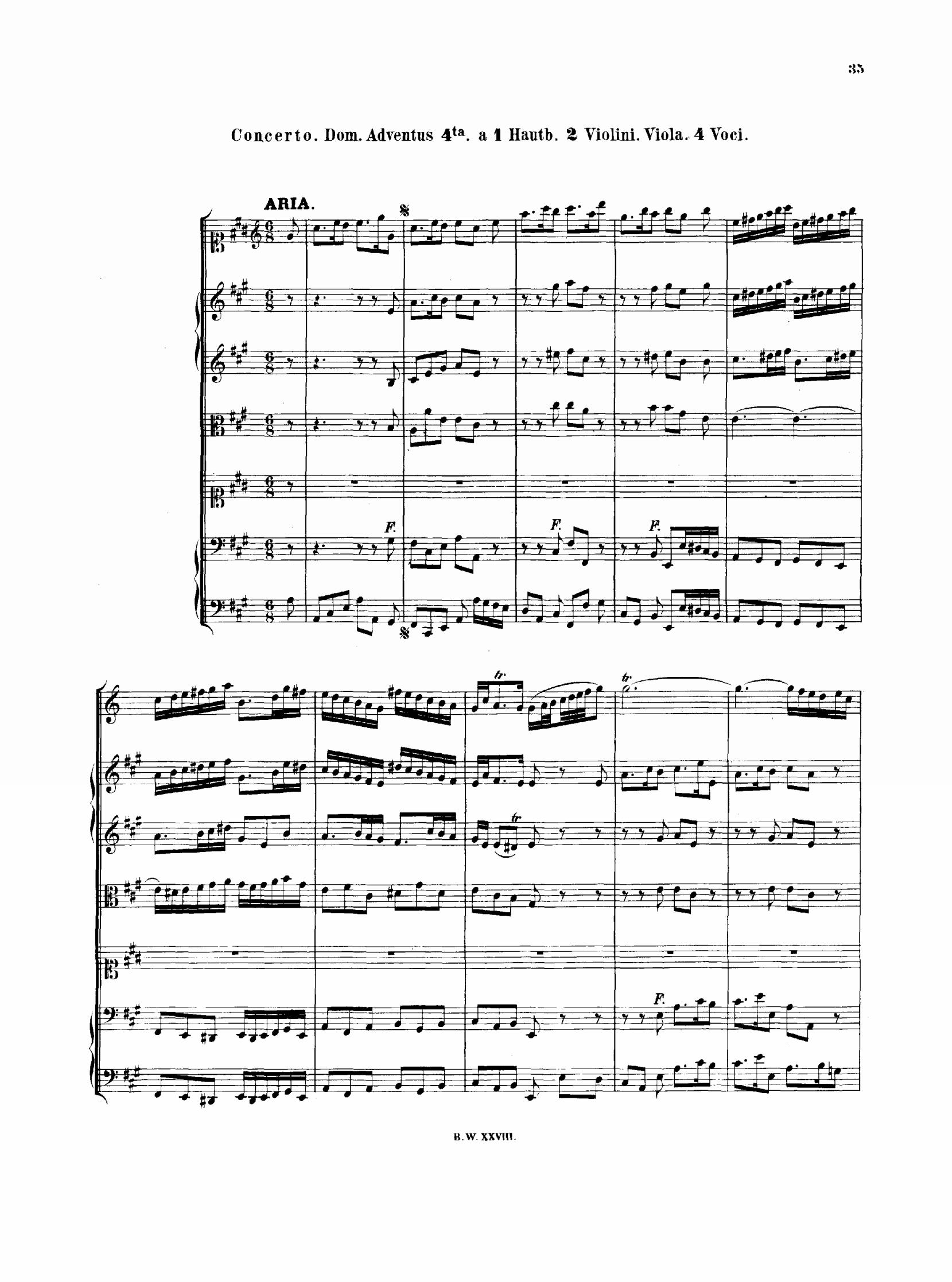
A small ensemble, with the oboe playing only in the first movement. The subject of this particular Sunday's gospel reading was baptism.

1. Aria (Soprano): Bereitet die Wege, bereitet die Bahn!

The long melisma on the word bahn (road) is typical.


The final phrase Messias kömmt an! (The Messiah is coming) is repeated thrice by the soprano, with all accompaniment dropping out ...


Prepare ye the highway, the way of the Lord!
The wilderness crieth
The Voice in the desert
Prepare ye the highway, the way for the Saviour
Prepare ye the highway
Make straight in the desert
The way for our God!


2. Recitativo (Tenore): Willst du dich Gottes Kind und Christi Bruder nennen

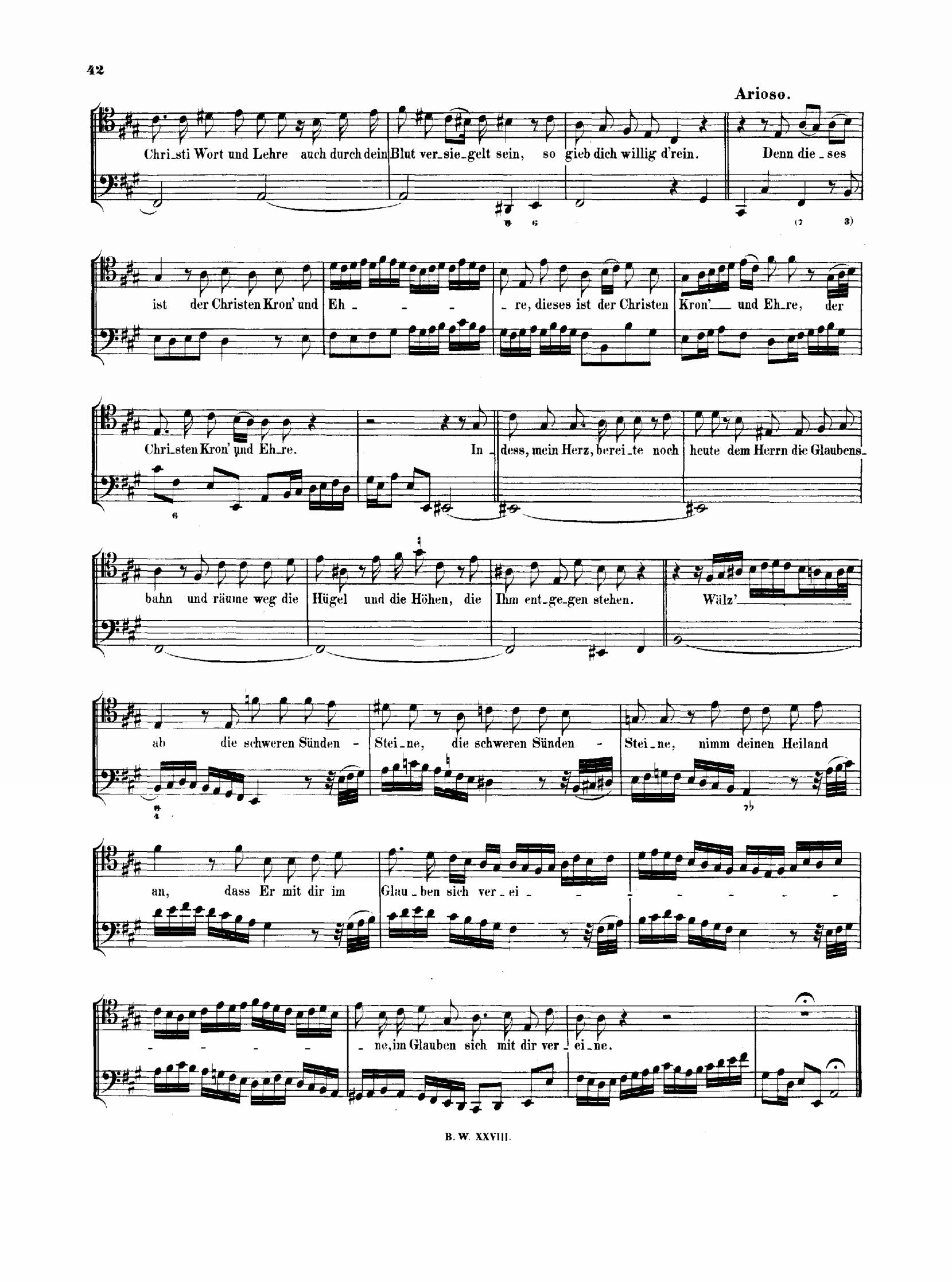
The music alternates between secco and arioso to underline important text:


Wouldst be a Child of God and Brother of the Saviour?
Then, must thy life conform
To Christianlike behaviour
Yea, man, the whole existence
Must ever to thy Faith be witness
Observe Christ's Word and Teaching
That it may never cease to be
A very part of thee
For this shall be the Christian's crowning glory
Today, my heart, prepare thee
To fare thee
Along the Path to Faith
Remove away the hillocks
The high places, and all that would impede Him
Roll off the ragged rocks of evil
And greet thy Saviour now
In faith to Him be plighted
Fast and firm united
Be plighted and united


3. Aria (Basso): Wer bist du? frage dein Gewissen

In this gorgeous aria, the bass -- in vox Christi -- asks Wer bist du? (Who are you?) twice, going down to a chesty low E-Flat, and the obbligato cello answers.


What are thou? ever ask they conscience
With honesty inquire anew
If thou, O man, be false or true
And face the truth without evasion
What are thou? study thou the Scriptures
For they will tell thee, what thou art:
A child of sin, in Satan's meshes
How full of guile thine evil heart

4. Recitativo (Alto): Ich will, mein Gott, dir frei heraus bekennen

Accompanied by strings throughout, the text seems to plead with God for forgiveness of sin -- in preparation for the aria to follow, in which baptism is the subject.


To Thee, my God confession frank is owing
'Til now have I not owned Thee as Thou art!
Lip service have I giv'n
Without in fact bestowing
On Thee the true allegiance of my heart
In loyalty have I been weak and swerving
And not at all of Thy support deserving
Yet, Jesus, Thou by Thy baptismal bath
Didst cleanse my sin and still Thy Father's wrath
Tho' fairest promises indeed I've spoken
Ah, sinner I, my covenant have broken
My misdeeds torture me!
Ah God, forgive Thou me
And grant that with unwavering emotion
I may renew my faith and deep devotion

5. Aria (Alto): Christi Glieder, ach bedenket

In sweeping 32nd-notes, the obbligato violin provides the image of water, the singer and violinist constantly complementing one another. (NB to TG: they may compliment each other after the performance ...)


Christian people ever ponder
How our Lord was baptised yonder
In the bath of Jordan's stream
Golgotha and Jordan cleared us
Of the stains that so besmeared us
Washing all our sins away
Jesus Christ's redeeming payment
Clothed us all in purple raiment
Whitest silk and bright array


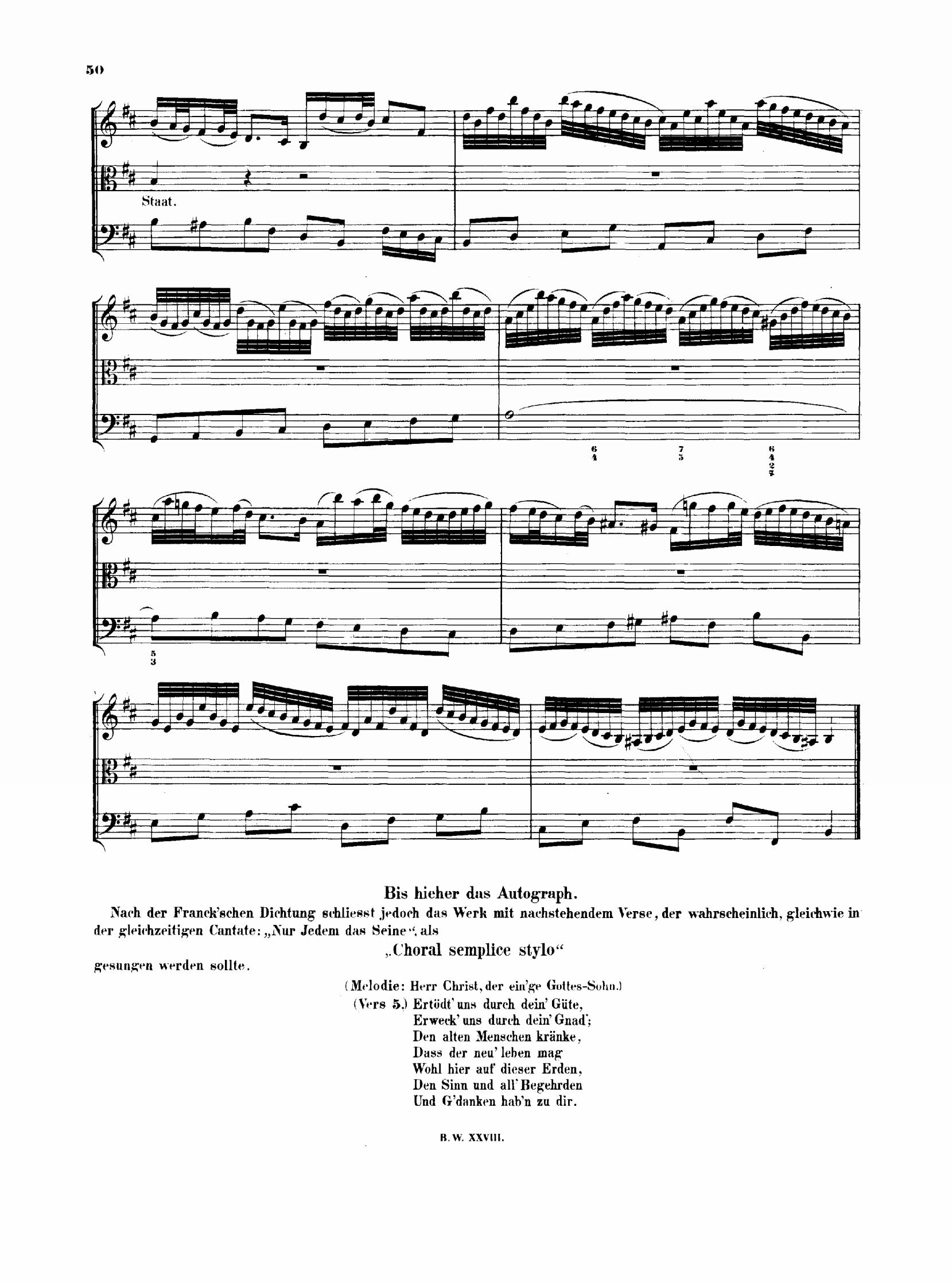
6. Choral (Coro): Ertöt uns durch dein Güte


Transform us by Thy kindness
Awake us thru Thy Grace
That we put on the New Man
The Old Man's pow'r efface
While here as mortals living
Our true allegiance giving
Our trust in Thee we place


Thursday, January 19, 2023

DV. HANDEL, George Friderick: Suite #5 in E Major for Harpsichord -- Mvmnt. 5: Air et 5 Variations ("L'harmonieux forgeron") / THE SWINGLE SINGERS

DV. HANDEL, George Friderick (1685-1759)

Suite #5 in E Major for Harpsichord -- Mvmnt. 5: Air et 5 Variations ("L'harmonieux forgeron")
Kenneth Gilbert, harpsichord
(4:11)

THE SWINGLE SINGERS
(2:23)


Nicolas de Larmessin II (1638-1694)

Ah, the "harmonious blacksmith."

The story is that Handel once took shelter from the rain in a smithy, and was inspired to write the tune upon hearing the hammer on the anvil; or that he heard the blacksmith singing the tune, which nicely corresponds to the fact that many Baroque composers acquired their melodies in this fashion.

Neither story is true.

The most likely history is that a man named William Lintern was a blacksmith's apprentice from Bath who later took up music and was the harmonious blacksmith, especially because he later actually published it under that name.

Wednesday, January 18, 2023

DIV. MOZART, Wolfgang Amadeus: Divertimento in B-Flat, KV App. 229/439b No. 2

DIV. MOZART, Wolfgang Amadeus (1756-1791)

Divertimento in B-Flat, KV App. 229/439b No. 2
1. Allegro (2:07)
2. Menuetto (4:00)
3. Larghetto (4:24)
4. Menuetto (4:09)
5. Rondo (4:04)
Netherlands Wind Ensemble

  • Often performed by a trio of oboe, clarinet and bassoon, or various combinations thereof equaling three, I have sought out this recording because it is played by three basset horns, which seems to be the combination that Mozart intended.
  • It is not in B-Flat Major, but rather F Major. It seems to have been transposed to C Major notation at some point, which is a Perfect Fifth above the basset horn's sounding pitch. So this one's in F Major.
  • It is known when Mozart composed these five divertimenti, and there is probably an unknown sixth one (the number usually published as a set).


Tuesday, January 17, 2023

DIII. ROSSINI, Gioachino: Sinfonia di Bologna

DIII. ROSSINI, Gioachino (1792-1868)

Sinfonia di Bologna (1808)
Prague Sinfonia Orchestra
Christian Benda, cond.
(6:01)


The sixteen-year-old Rossini wrote this as a scholastic exercise. One can easily discern the genius that would come from such juvenilia.

INDEX to 1000 POSTS CLASSICAL BLOG A-M

N-Z ABRAHAMSEN, Hans / 10 Pieces for Orchestra / DCCCXCV ADAMS, John / Century Rolls / XXXVII ADAMS, John / Harmonielehre / CXXI ADAMS, John...