Sunday, January 14, 2024

DCCCLXV. RAVEL, Maurice: Daphnis et Chloé

DCCCLXV. RAVEL, Maurice (1875-1937)

Daphnis et Chloé (1912)
Tableau I (Une prairie a la lisiére d'un bois sacré)
1. Introduction et danse religieuse
2. Danse générale
3. Danse grotesque de Dorcon
4. Danse légére et gracieuse de Daphnis
5. Danse de Lycéion
6. Nocturne. Danse lente et mystérieuses des Nymphes
Tableau II (Camps des pirates)
7. Introduction
8. Danse guerrière
9. Danse suppliante de Chloé
Tableau III (Paysage du première 1er tableau, a la fin de la nuit)
10. Lever du jour
11. Pantomime (Les amours de Pan et Syrinx)
12. Danse générale (Bacchanale)
WDR Radio Choir
WDR Symphony Orchestra
Jukka-Pekka Saraste, cond.
(55:23)

Symphonie chorégraphique. For orchestra and wordless chorus.


Set design for the 1912 premiere

1. Introduction et danse religieuse


2. Danse générale


3. Danse grotesque de Dorcon


4. 
Danse légére et gracieuse de Daphnis


5. Danse de Lycéion


6. Nocturne. Danse lente et mystérieuses des Nymphes


7. 
Introduction


8. 
Danse guerrière


9. Danse suppliante de Chloé


10. Lever du jour


11. Pantomime (Les amours de Pan et Syrinx)


12. Danse générale (Bacchanale)


Saturday, January 13, 2024

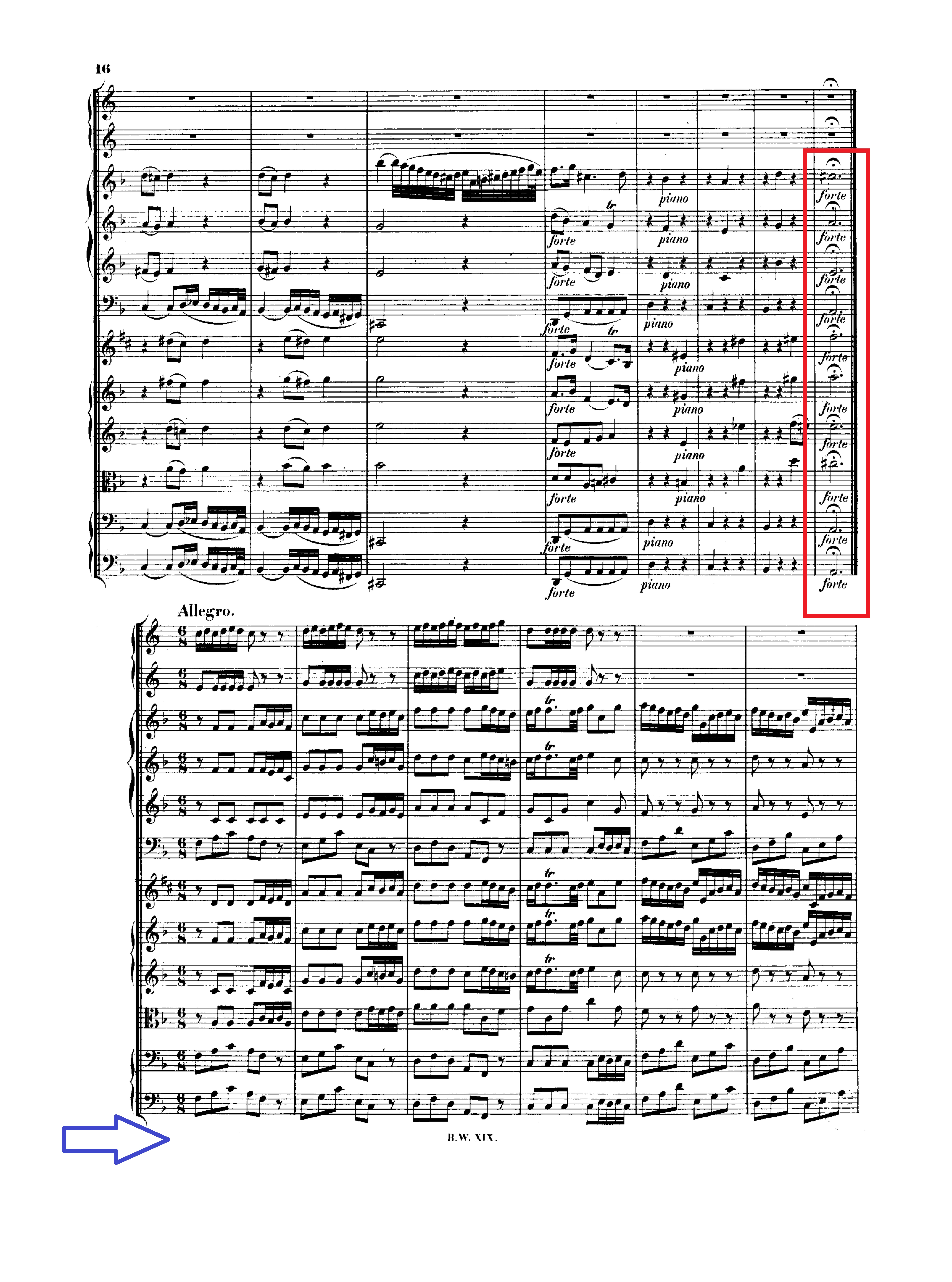
DCCCLXIV. BACH, J.S.: Cantata #16: Herr Gott, dich loben wir, BWV 16

DCCCLXIV. BACH, J.S. (1685-1750)

Cantata #16: Herr Gott, dich loben wie, BWV 16 (1726)
1. [Coro]: Herr Gott, dich loben wir
2. Recitativo (Basso): So stimmen wir bei dieser frohen Zeit
3. [Coro &] Aria (Basso): Laßt uns jauchzen, laßt uns freuen
4. Recitativo (Alto): Ach treuer Hort
5. Aria (Tenore): Geliebter Jesu, du allein
6. Choral (Coro): All solch dein Güt wir preisen
Gächinger Kantorei
Bach-Collegium Stuttgart
Helmuth Rilling, cond.
(17:50)

Even when Bach's librettists may have felt the need to wander far afield from the prescribed readings for the day to express a related sentiment -- this cantata proves the point.

Galatians 3:23-29 (by faith we inherit) and Luke 2:21 (Jesus's bris),

Instead, the librettist -- Lehms -- writes about giving praise and being thankful -- in declamatory form in the recitatives and poetically dramatic in the arias.

1. [Coro]: Herr Gott, dich loben wir

The opening chorus is the German Te Deum.


Praise and thanks to God, who did not allow
Their jaws to trap us
As a bird escapes the snare
Our souls have escaped
The snare is broken, and we are free
The name of the Lord assists us
The God of Heaven and Earth

Lord God, we praise you
Lord God, we thank you!
You, God the Father in all eternity
The world honours throughout its entire breadth

2. Recitativo (Basso): So stimmen wir bei dieser frohen Zeit


We thus raise our voices at this joyous time
In ardent devotion
And present to you, o God, for this new year
The first sacrifice of our hearts
What have you not done since eternity
To us for our salvation
And what love and constancy must our breasts still feel now?
Your Zion sees itself completely at peace;
Happiness and blessings are its lot
The temple resounds
With psalters and harps, and our souls swell
When we but take the ardour of devotion into our mouths and hearts
O should not a new song therefore be heard
And we sing in burning love!

3. [Coro &] Aria (Basso): Laßt uns jauchzen, laßt uns freuen


Let us rejoice, let us be glad
God's goodness and constancy
Are with us anew every morning!
If His hand crowns and blesses
Ah, then believe that our condition
Shall be eternally happy!

4. Recitativo (Alto): Ach treuer Hort


Ah, constant refuge

Defend furthermore your cherished Word
Defend church and school
Thus will your kingdom be increased
And Satan's evil cunning thwarted
Only preserve peace
And beloved tranquility
Then already enough is granted to us
And nothing but well-being is our lot
Ah! God, you will still
Further water the land
You will ever improve it
You will, with your own hand
And your blessing, cultivate it
Happy are we! if we trust you for ever and ever
My Jesus and my salvation

5. Aria (Tenore): Geliebter Jesu, du allein

In 1726, it was the oboe. Around 1734, it was a violetta -- perhaps the good oboists were out of town ...


Beloved Jesu, you alone
Shall be my soul's riches!
We want to put you before all treasures
In our faithful hearts
Yes, when the bond of life tears
Our spirits, contented in God
Join eagerly in song with our lips:
Beloved Jesu, you alone
Shall be my soul's riches

6. Choral (Coro): All solch dein Güt wir preisen


We praise all such goodness of yours
Father on the throne of Heaven
As you prove to us
Through Christ your Son
And further beg you
Give us a peaceful year
Preserve us from all sorrow
And gently nourish us

Friday, January 12, 2024

DCCCLXIII. LIEBERSON, Peter: Rilke Songs

DCCCLXIII. LIEBERSON, Peter (1946-2011)

Rilke Songs (2001)
1. O ihr Zärtloichen (3:14)
2. Atmen, du unsichtbares Gedicht! (3:27)
3. Wolle die Wandlung (3:18)
4. Blumenmuskel, der der Anemone (3:27)
5. Stiller Freund (4:35)

Thursday, January 11, 2024

Wednesday, January 10, 2024

DCCCLXI. BACH, J.S.: Brandenburg Concerto #1 in F Major, BWV 1046

DCCCLXI. BACH, J.S. (1685-1750)

Brandenburg Concerto #1 in F Major, BWV 1046 (1721)
1. [Allegro]
2. Adagio
3. Allegro
4. Menuetto -- Trio -- Menuetto -- Polonaise -- Menuetto -- Trio -- Menuetto
Orchestra Mozart
Claudio Abbado, cond.
(18:06)

Some sections come from music Bach composed as early as 1713 -- but when he filled it all out he left us with one of the great masterpieces of music.

First movement

Four distinct instrumental groups (horns, oboes, strings and continuo) -- constantly weaving in and out of the sound texture:


These suspensions in the horns are achingly beautiful:


Later repeated a fourth higher:


Second movement

D Minor. A melody with a touch of agony is played in turn by the oboe, the piccolo violin (tuned a minor third lower), and the continuo.


The weird chords at the end -- broken up into groups of two -- lead to an A dominant seventh chord, which of course should resolve to the D Minor key of the movement.

Third movement

But instead resolves to F Major. Very festive; Vivaldi-like ...


The piccolo violin is featured -- in various instrumental combinations, as in this duet with the horn:


Fourth movement

In the first minuet, Bach moves the melody up a fifth after the first repeat.

The trio is two oboes and bassoon.

The Polonaise is stately.

The delightful final Trio is for the horns and oboes. 


Tuesday, January 9, 2024

DCCCLX. MOZART, Wolfgang Amadeus: Sonata #8 in F Major for Piano and Violin, K. 13

DCCCLX. MOZART, Wolfgang Amadeus (1756-1791)

Sonata #8 in F Major for Piano and Violin, K. 13 (1764)
1. Allegro (5:14)
2. Andante (6:06)
3. Menuetto I and II (2:29)
Rachel Podger, violin
Gary Cooper, harpsichord

When the Grand Tour reached London, the eight-year-old prodigy (soon to be nine!) wrote six sonatas, commissioned by and dedicated to Queen Charlotte.

First movement


Second movement


Third movement


Monday, January 8, 2024

DCCCLIX. HAYDN, Franz Joseph: Concerto in E-Flat Major for Trumpet

DCCCLIX. HAYDN, Franz Joseph (1732-1809)

Concerto in E-Flat Major for Trumpet (1796)
1. Allegro
2. Andante
3. Allegro (rondo)
Markus Stockhausen, trumpet
Radio-Symphonie-Orchester Berlin
Karlheinz Stockhausen, cond.
(20:00)

Cadenzas by Karlheinz Stockhausen.

The development of the trumpet capable of playing the entire chromatic scale can be attributed to the trumpet virtuoso Anton Weidinger, for whom Haydn wrote this work.

He invented a 7-keyed trumpet (still no valves -- not until 1830).

First movement


The trumpet takes up the theme:


Second movement

A relaxing 6/8 cantabile in the subdominant (A-Flat):


Third movement

In Squid Game, the players woke up to this music.


INDEX to 1000 POSTS CLASSICAL BLOG A-M

N-Z ABRAHAMSEN, Hans / 10 Pieces for Orchestra / DCCCXCV ADAMS, John / Century Rolls / XXXVII ADAMS, John / Harmonielehre / CXXI ADAMS, John...